Posts

Look Closer

Image
Throughout the course of any given day, I have a number of interactions with students, teachers, parents, support staff members, administrators, and community stakeholders about achievement, performance, instructional techniques, strategies to serve students who struggle, events taking place in their lives, among many other topics.  I love these conversations, as I am able to learn about great things taking place in our schools, struggles or areas where I can support, and often times thoughts or plans are generated about how we can become better.  Some of these conversations are exciting, as teachers share how much their students are producing with the Lucy Calkins Writer's Workshop model of instruction.  Other times the conversations are full of frustration, as people are struggling to meet a variety of needs and don't know what to do moving forward.  Sometimes I have a hard time figuring out where the person is coming from within these interactions which forces me ...

What Great Educators Do Differently

Image
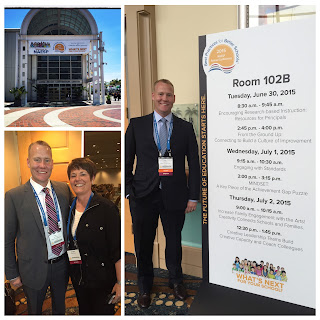
Over the weekend, I had the opportunity to attend the inaugural  What Great Educators Do Differently Conference  in Chicago.  There were so many fantastic educators at this event willing to share their expertise related to teaching, learning, leadership, technology, and making connections.  After attending various sessions facilitated by  Paul Solarz ,  Dwight Carter ,  Amber Teamann ,  Angela Maiers , and having conversations with other participants, I have developed a list of what I feel great educators do differently.  The list and descriptions will not seem mind-boggling in any way; however, I believe that truly great educators do these things consistently within their daily practices.           Great educators know their strengths and where they can grow: I have faced a hard truth over the past four years serving in my role as elementary principal of two schools: I cannot be everything to everyb...

A Walk to Remember...

Image
The embedded podcast above features a conversation that I had with Josh Allen , Brent Catlett and Devin Schoening from Dads in Ed; it takes a deeper look at the content within this post. I hope you enjoy it. School started on Thursday, and just like every year, there is excitement and anticipation in the air. Students arrive with new clothing, fresh haircuts, and summer tans ready for new experiences and opportunities to connect with their friends.  Teachers and staff arrive energized with hopes of making differences in the lives of children.  This year has not been any different, as there has definitely been a buzz the first two days. Dismissal time in any school is always somewhat chaotic with many people moving in many different directions in a short amount of time.  It usually takes a good two weeks before the wrinkles are ironed out and the flow at the end of the day becomes smooth.  We experience a number of small issues that work themselves out af...

What Can We Learn from Disney?

Image
I recently returned from the National Association of Elementary School Principal's Conference ( #naesp15 ) in Long Beach, California and finally have time to quietly reflect on the week filled with fantastic memories. There is nothing like attending a conference in 2015.  It is truly amazing seeing people from my Personal Learning Network (PLN) face to face after interacting through Twitter, Voxer, and Facebook over the past several months.  I wrote about this very topic last year after attending #naesp14 in Nashville .  I am extremely blessed to be surrounded by incredible people within my network who truly care about students, staff members, families, and making their schools as great as they can be.  Throughout the past couple of years I have been provided with opportunities to present and share my learning with small and large groups of people at the local, state, and national levels.  This would never have been possible if I did not make a conscious effo...

Belding | Vernon | Rooney

Image
Image Credit: monologuedb.com Imagine that you are not an educator, and do me a favor.  Close your eyes and think about what comes to mind when I say one word... principal .  Most of the people that I know outside of the educational field will mention one, if not all three of these names: Richard Belding, Richard Vernon, and Edward Rooney. Last weekend, I had the chance to spend some time with a few of my friends that I haven't seen in a number of years.  The conversation was pretty typical, as we caught up on each other's work and social | family lives.  Within this conversation and on two additional occasions in the last week, I was asked about my job and what exactly I do as an elementary school principal.  When I explained my job and responsibilities to my friends, I don't think I highlighted the key points as much as I would have liked. Image Credit: savedbythebell.wikia.com "So are you like a modern day Mr. Belding, or what?"  This was the...

Connecting with Purpose

Image
*This post is a compliment to an article that I wrote for  NAESP's May/June edition of Principal magazine . The full article can be found  here .* A few weeks ago, I wrapped up my third year as principal of Epworth and Farley Elementary Schools , and cannot thank our students, staff, families, and community members enough for another fantastic experience.  Being the principal of two elementary schools is extremely rewarding, and like all educators at this day in age, never short of daily challenges.  I consider myself a connected educator, and about three years ago, I made a conscious effort to connect with educational leaders to build my skills while learning from great minds in the field.  The platform that I chose to utilize was (and is) Twitter which I tried to aggressively push upon fellow administrators and teachers within my district. After three years of connecting with my Personal Learning Network (PLN), I have learned a few things and altered my app...

Legacy

Image
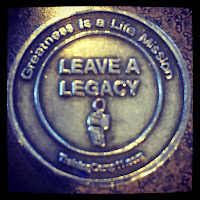
Over the past few years, I have attended a number of retirement parties for teachers, administrators, and support staff members.  Within these gatherings, I have interpreted a common theme from the comments and speeches centered around what type of legacy has been left by the retiree. As I listened to the various comments in recent weeks, I couldn't help but think about what I would like people to remember about me when my time in education has come to a close. We have all been in a composition or early journalism class where we were given an assignment to write our own eulogy.  I first completed this task in high school and wrote something ridiculous about being a millionaire Major League Baseball player or something along those lines.  I started thinking about this exercise much more seriously after I first read The Seven Habits of Highly Effective People by one of my heroes, the late Stephen Covey .  After reading Covey's work in 2007, I realized that my dail...